
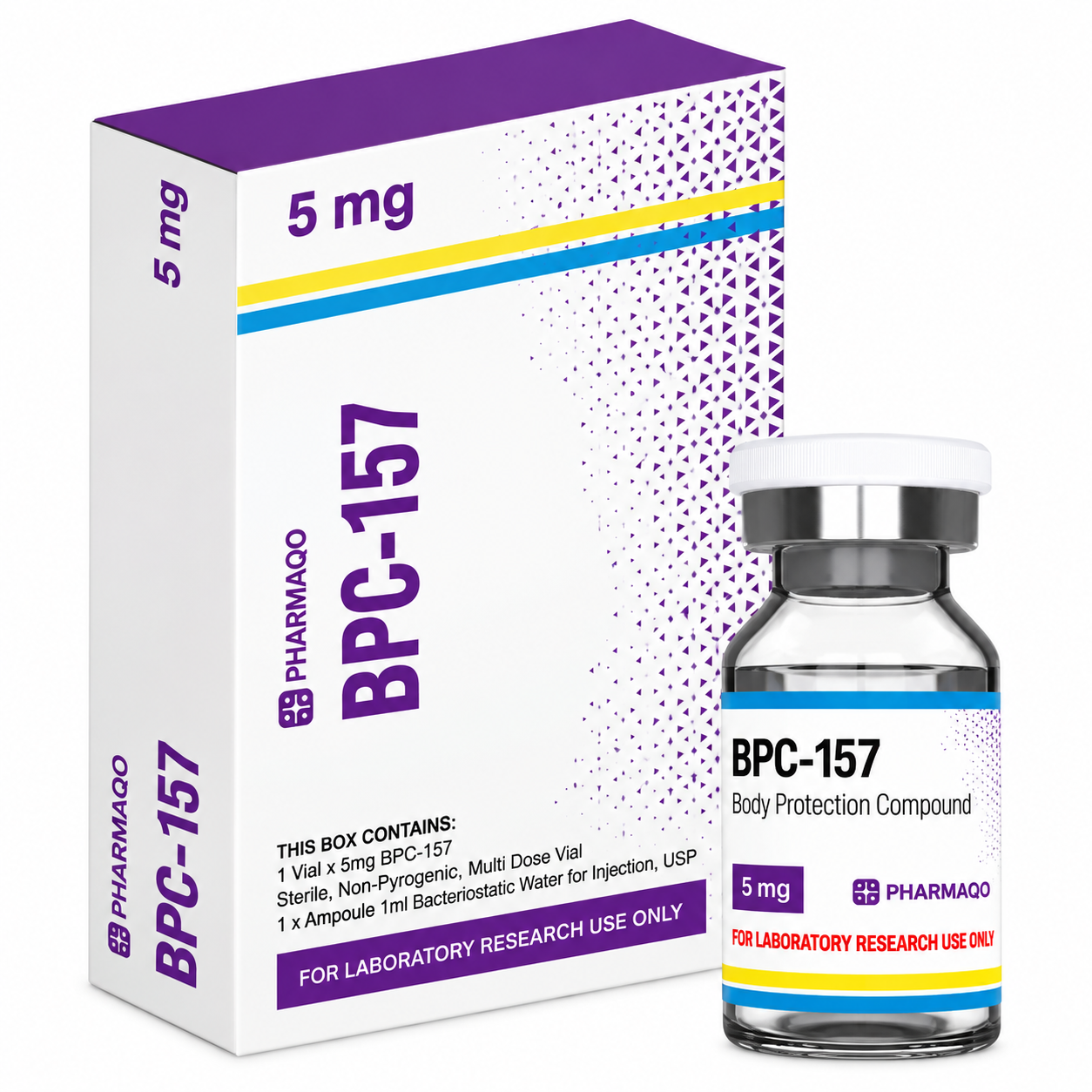
BPC-157 peptide

Original price was: $60.00.$55.00Current price is: $55.00.
BPC-157 is a synthetic 15-amino-acid research peptide studied in experimental models involving tissue response, gastrointestinal biology, angiogenesis, and inflammatory pathways. When comparing BPC-157 products, check the labeled strength, quantity, manufacturer information, storage requirements, batch details, and available analytical documentation.
BPC-157 Peptide: What to Know Before You Buy
BPC-157 is an experimental peptide widely discussed in research involving tissue response, blood-vessel formation, gastrointestinal biology, and recovery mechanisms. It has attracted strong commercial interest from people searching for BPC-157 for sale, but it is important to separate promising laboratory findings from benefits that have actually been demonstrated in people.
BPC-157 is not an FDA-approved medicine for muscle recovery, tendon injuries, inflammatory bowel disease, ulcers, joint repair, or athletic performance. Products sold as BPC-157 should therefore be evaluated according to their actual specifications, documentation, intended use, and regulatory status rather than promises of rapid healing.
Why BPC-157 Has Become So Popular
BPC-157 is often called Body Protection Compound 157. It is a synthetic peptide consisting of 15 amino acids and is associated with a sequence derived from a gastric protein.
Most interest in BPC-157 comes from experimental research rather than established clinical treatment.
Studies using laboratory and animal models have explored its relationship with tissue repair, blood-vessel signaling, gastrointestinal tissue, inflammatory processes, and wound healing.
Those findings have generated considerable interest among researchers and, separately, athletes and bodybuilders. However, interest in a compound does not establish clinical effectiveness.
This distinction is especially important when evaluating claims made by websites offering BPC-157 for sale.
BPC-157 Research at a Glance
Compound: BPC-157
Common Name: Body Protection Compound 157
Type: Synthetic peptide
Length: 15 amino acids
Primary Research Areas: Tissue response, gastrointestinal biology, angiogenesis, inflammation, wound models
Human Clinical Evidence: Limited
FDA-Approved Medicine: No
Established Human Recovery Treatment: No
Sports Status: Prohibited under anti-doping rules
For a specific Pharmaqo product, the vial strength, quantity, form, storage requirements, and included accessories should be taken directly from its packaging or reliable batch documentation rather than assumed from other BPC-157 products.
A Closer Look at the Science Behind BPC-157
BPC-157 is interesting because experimental research suggests interactions with several biological pathways involved in tissue response.
One frequently discussed area is angiogenesis, the process through which new blood vessels develop from existing vessels.
Blood-vessel formation plays an important role in normal tissue maintenance and wound repair. Experimental BPC-157 studies have explored signaling connected with this process.
Researchers have also examined pathways involving nitric oxide, inflammatory responses, cellular migration, and gastrointestinal tissue.
This creates a plausible scientific basis for continued research.
It does not establish BPC-157 as a clinically proven healing medicine.
Muscle Recovery: Promising Idea or Proven Benefit?
Muscle recovery is one of the main reasons people search for BPC-157 near me or look to buy BPC-157 peptide products.
Online descriptions often claim the peptide repairs muscle fibers rapidly after strenuous exercise.
The evidence is more limited than those statements suggest.
Preclinical research has generated interest in BPC-157 and tissue-repair mechanisms, but controlled human evidence supporting routine use for post-workout muscle recovery remains insufficient.
Muscle recovery itself depends on many variables, including training volume, sleep, nutrition, protein intake, injury status, age, and overall health.
For this reason, BPC-157 should not be advertised as a guaranteed way to reduce recovery time between workouts.
Tendons and Ligaments Are Major Research Interests
Tendon and ligament claims are another major part of BPC-157’s reputation.
Experimental models have investigated BPC-157 in relation to tendon healing and connective-tissue responses. These findings are scientifically interesting because tendon injuries can be slow to heal.
But there is an important difference between saying:
BPC-157 has been investigated in experimental tendon-healing models
and saying:
BPC-157 heals tendon injuries in people.
The first describes an area of research. The second implies an established treatment outcome.
A trustworthy commercial page should preserve that distinction.
BPC-157 and Gut Research
BPC-157 is unusual among popular research peptides because gastrointestinal research forms an important part of its scientific background.
This connection has led to strong online claims involving stomach ulcers, inflammatory bowel disease, Crohn’s disease, and so-called leaky gut.
Those claims should not be presented as established treatments.
Experimental research has investigated BPC-157 in gastrointestinal models, but there is not enough high-quality human clinical evidence to market it as a treatment for Crohn’s disease, ulcerative colitis, ulcers, or other gastrointestinal diseases.
Anyone with persistent digestive symptoms needs appropriate medical evaluation rather than relying on an experimental peptide.
What About Inflammation?
BPC-157 is also frequently described as a powerful anti-inflammatory peptide.
Research models have explored its influence on inflammatory processes, but this does not make BPC-157 an approved anti-inflammatory medicine.
Inflammation itself is not one single condition. It can occur because of injury, infection, autoimmune disease, repetitive stress, metabolic disease, and numerous other causes.
Reducing a marker in an experimental model cannot automatically establish that a compound safely treats chronic inflammation in people.
Why BPC-157 Is Not a Normal Fitness Supplement
BPC-157 is often marketed alongside protein powders, vitamins, amino acids, and other sports supplements.
That can create the wrong impression.
It is an experimental peptide, not an ordinary nutritional supplement with well-established consumer-use instructions.
There is no FDA-approved BPC-157 bodybuilding indication, recovery protocol, injury-treatment regimen, or standardized human dosing schedule.
This matters commercially because terms such as buy BPC-157 peptide should not be accompanied by promises that customers can simply add it to a fitness routine and expect predictable results.
Dosage Claims Require Particular Caution
Many online BPC-157 guides recommend daily microgram doses and provide detailed injection schedules.
Those recommendations are often based on informal peptide communities rather than an approved human prescribing standard.
There is currently no established FDA-approved BPC-157 dose for:
- Muscle recovery
- Tendon repair
- Ligament injuries
- Joint pain
- Athletic performance
- Gut disorders
- Post-surgical healing
For this reason, a product page should identify the amount supplied in the specific product without converting that specification into a self-administration protocol.
Human Safety Data Are Still Limited
Statements such as “BPC-157 is generally safe” or “most users experience no side effects” can sound reassuring, but they go beyond the strength of available human evidence.
Limited clinical data means the complete human adverse-effect profile has not been established.
Unknowns can include effects related to long-term exposure, interactions with medicines, reproductive health, metabolic effects, and other biological pathways.
Products obtained outside regulated pharmaceutical supply systems can introduce additional concerns involving identity, concentration, contamination, and sterility.
Lack of documented adverse events is not the same as evidence of safety.
BPC-157 and Competitive Sport
Competitive athletes need an additional consideration.
BPC-157 is prohibited under anti-doping rules.
Athletes subject to drug testing should therefore not assume that the compound is acceptable simply because it is marketed as a peptide or research product.
This is particularly important for professional athletes, collegiate competitors, and anyone participating under an anti-doping organization.
Quality Matters More Than “Pharmaceutical Grade” Marketing
The phrase pharmaceutical grade appears frequently in peptide marketing.
It should not be used simply because a product comes in a professional-looking vial.
Likewise, statements such as 99% pure, third-party tested, sterile, or laboratory verified require supporting documentation relevant to the actual product or batch.
Useful quality information can include:
Batch or lot identification
Compound identity testing
Purity analysis
Concentration information
Manufacturing information
Expiration information
Storage requirements
Certificate of analysis when applicable
Transparent specifications provide stronger commercial value than unsupported superlatives.
BPC-157 for Sale: What Buyers Should Actually Check
A person searching for BPC-157 for sale is usually comparing products, suppliers, quantities, and prices.
A useful product page should make those comparisons easier without repeating “buy BPC-157” in every section.
Check the exact product strength first. Then confirm the number of vials or units supplied.
Manufacturer identification, batch details, packaging integrity, expiration information, storage requirements, and authentication features should also be considered.
If analytical testing is advertised, the documentation should correspond to the relevant product or batch.
A low price or attractive package cannot independently establish identity or quality.
BPC-157 Near Me: Understanding Search Intent
Searches for BPC-157 near me often indicate that someone wants to know where the compound is available.
That commercial phrase can be included naturally on a product page, but availability should not be confused with medical approval.
Local laws and rules surrounding research peptides can vary. A product being available through an online seller does not establish that it is authorized as a medicine or approved for human administration.
For search visibility, answering these practical questions clearly is more useful than repeating the exact keyword throughout the page.
BPC-157 Compared With TB-500
BPC-157 and TB-500 are frequently mentioned together because both are associated with experimental tissue-repair research.
They are different compounds.
BPC-157 is a 15-amino-acid synthetic peptide associated with research involving gastrointestinal and tissue-response pathways. TB-500 is associated with thymosin beta-4 biology and research involving actin regulation, cell migration, and tissue processes.
Neither should be described as automatically making the other more effective.
The popularity of combining experimental peptides does not establish the safety or effectiveness of the combination.
BPC-157 Compared With IGF-1 LR3
IGF-1 LR3 belongs to another research category.
It is a modified insulin-like growth factor analogue associated with IGF-1 receptor signaling. BPC-157 has a different structure and research background.
Grouping the two together as a “perfect recovery stack” oversimplifies their biology and suggests a validated protocol that does not exist.
Researchers should evaluate each compound independently.
Storage Requires Product-Specific Information
Peptide storage is another area where websites frequently copy instructions from one product to another.
That approach should be avoided.
Temperature requirements can depend on formulation, physical form, manufacturer instructions, preparation status, and other stability factors.
The storage conditions stated for the specific BPC-157 product should therefore take priority.
Likewise, a stability period after laboratory preparation should not be invented or borrowed from an unrelated peptide product.
Common Questions About BPC-157
What is BPC-157?
BPC-157 is a synthetic 15-amino-acid peptide associated with experimental research into tissue response, gastrointestinal biology, angiogenesis, and related processes.
Is BPC-157 an anabolic steroid?
No. BPC-157 is a peptide and does not belong to the anabolic-androgenic steroid class.
Is BPC-157 approved for muscle recovery?
No. BPC-157 is not an FDA-approved treatment for muscle recovery or athletic performance.
Does BPC-157 heal tendons and ligaments?
Preclinical research has explored connective-tissue and healing mechanisms, but this does not establish BPC-157 as a proven human treatment for tendon or ligament injuries.
Is BPC-157 proven for gut health?
Experimental gastrointestinal research exists, but BPC-157 should not be marketed as a clinically established treatment for ulcers, Crohn’s disease, inflammatory bowel disease, or other gastrointestinal conditions.
Is BPC-157 safe?
There is not enough robust human clinical evidence to establish a complete safety profile for BPC-157.
Can athletes use BPC-157?
BPC-157 is prohibited under anti-doping rules, which is particularly relevant for athletes subject to testing.
Where can I find BPC-157 near me?
Availability depends on location, local regulations, and the intended purpose. BPC-157 should not be represented as an approved prescription treatment simply because it is commercially available.
What should I check before buying BPC-157?
Check the labeled compound, strength, quantity, manufacturer information, batch details, expiration information, storage requirements, product status, and supporting analytical documentation where available.
A Better Way to Evaluate BPC-157
The strongest reason to research BPC-157 is not a promise of overnight recovery. It is the compound’s unusual and developing scientific profile.
Experimental studies have generated interest in tissue response, gastrointestinal biology, angiogenesis, cell signaling, and inflammatory processes. These findings help explain why BPC-157 peptide has attracted attention well beyond laboratory research.
At the same time, evidence matters.
BPC-157 is not an FDA-approved treatment for injury recovery, muscle growth, joint repair, digestive disease, or athletic performance. Human safety and efficacy data remain limited.
For anyone comparing BPC-157 for sale, useful product information should therefore focus on the actual strength, package quantity, intended research use, storage information, authentication, and batch-specific quality documentation rather than guaranteed healing claims.
Be the first to review “BPC-157 peptide”
Related products
INJECTIFY PEPTIDES
INJECTIFY PEPTIDES
INJECTIFY PEPTIDES
INJECTIFY PEPTIDES
INJECTIFY PEPTIDES

INJECTIFY PEPTIDES
INJECTIFY PEPTIDES
INJECTIFY PEPTIDES
Reviews
There are no reviews yet.