
Ozempic semaglutide
Price range: $200.00 through $320.00
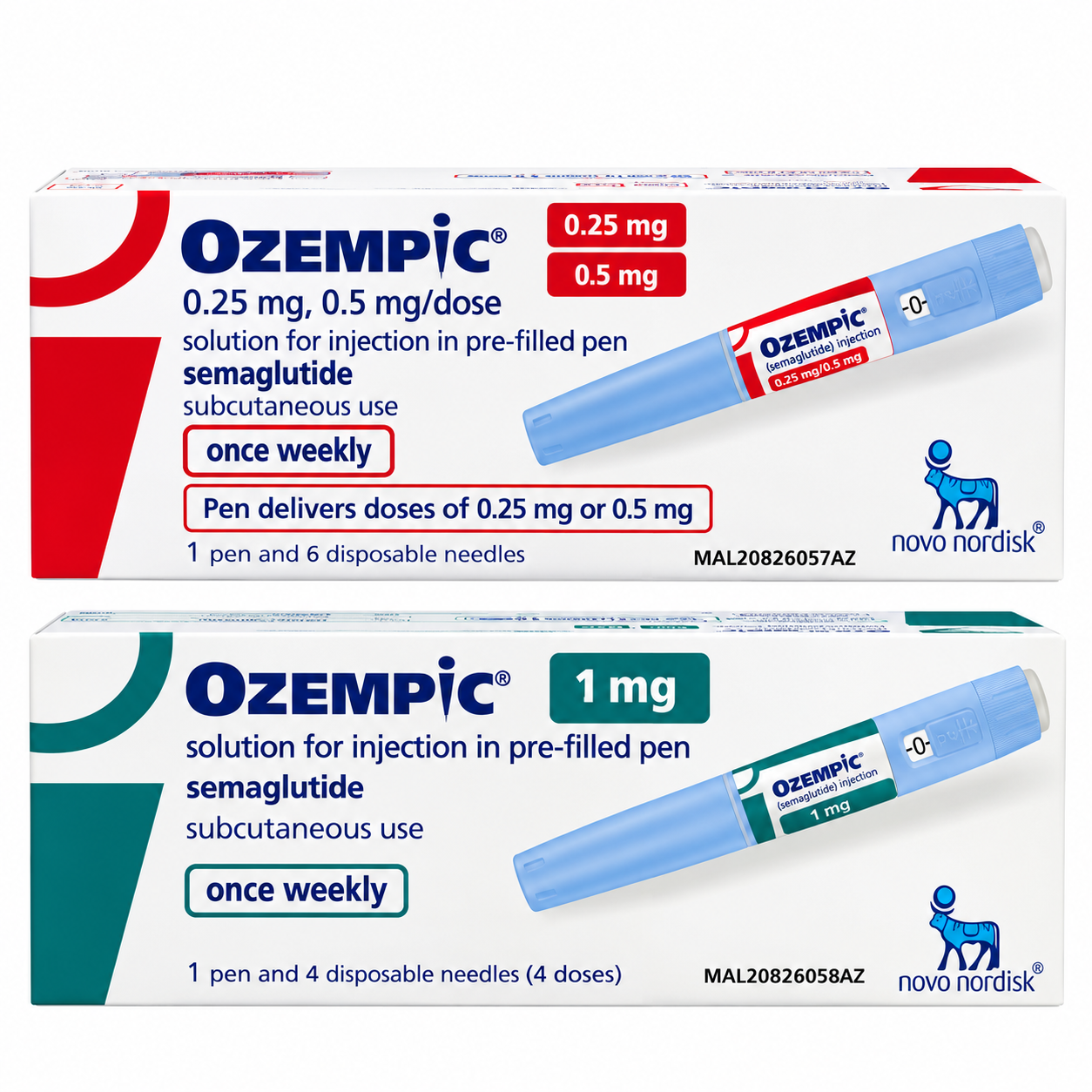
Ozempic is a prescription medicine containing semaglutide and supplied as a once-weekly pre-filled injection pen. The pictured Novo Nordisk presentations include 0.25 mg or 0.5 mg doses with six disposable needles and a 1 mg pen with four disposable needles for four doses. Review the product specifications, approved uses, safety information, and prescribed strength before use.
Ozempic Semaglutide Injection: Product Guide, Uses, Strengths & Safety Information
Ozempic semaglutide is a prescription medicine containing semaglutide, a GLP-1 receptor agonist used to improve blood sugar control in adults with type 2 diabetes alongside diet and exercise. The Novo Nordisk pre-filled pens shown include a pen delivering 0.25 mg or 0.5 mg doses and a 1 mg dose pen, designed for once-weekly subcutaneous administration.
For people searching “where can I get Ozempic near me?”, the appropriate route is through a licensed healthcare professional and a legitimate pharmacy that can dispense the prescribed product. Ozempic requires a prescription, and the strength supplied should match the prescription written for the patient.
Ozempic Product Specifications
| Specification | Product Information |
|---|---|
| Brand | Ozempic |
| Active Ingredient | Semaglutide |
| Manufacturer | Novo Nordisk |
| Drug Class | GLP-1 receptor agonist |
| Product Type | Prescription medicine |
| Form | Solution for injection |
| Delivery System | Pre-filled pen |
| Administration | Subcutaneous injection |
| Frequency | Once weekly |
| Shown Strengths | 0.25 mg, 0.5 mg and 1 mg doses |
| 0.25/0.5 mg Presentation | 1 pre-filled pen |
| Included With Shown 0.25/0.5 mg Pack | 6 disposable needles |
| 1 mg Presentation | 1 pre-filled pen |
| Included With Shown 1 mg Pack | 4 disposable needles, 4 doses |
| Prescription Required | Yes |
These specifications describe the product presentations shown. Packaging and available presentations can vary by market, so the dispensing label and current prescribing information should always take priority.
What Is Ozempic?
Ozempic is the brand name for a prescription medicine containing semaglutide.
Semaglutide belongs to a class of medicines called glucagon-like peptide-1 receptor agonists, commonly known as GLP-1 receptor agonists.
Ozempic is used alongside diet and exercise to improve blood sugar control in adults with type 2 diabetes. It also has cardiovascular and kidney-related indications for certain adults with type 2 diabetes and relevant established conditions.
Ozempic is not insulin.
How Does Ozempic Work?
Semaglutide acts on GLP-1 receptors and influences several processes involved in blood glucose regulation.
Glucose-Dependent Insulin Secretion
Ozempic can increase insulin secretion when blood glucose is elevated. Its effect on insulin therefore responds to glucose levels.
Reduced Glucagon Secretion
Semaglutide can reduce glucagon secretion. Glucagon is a hormone involved in regulating blood glucose levels.
Gastric Emptying
Ozempic delays gastric emptying, meaning food may leave the stomach more slowly.
This effect is also important when considering other oral medications because delayed gastric emptying may influence how some medicines are absorbed.
Ozempic and Type 2 Diabetes
Blood sugar management is the primary reason many patients encounter Ozempic.
For adults with type 2 diabetes, treatment may involve nutrition, physical activity, blood glucose monitoring, and one or more medicines depending on individual needs.
Ozempic is intended to complement an appropriate diet and exercise plan rather than replace these measures.
It is also important to distinguish type 2 diabetes from type 1 diabetes. Ozempic should not be treated as a replacement for insulin in someone who requires insulin therapy.
Ozempic and Weight Loss
Ozempic has become widely associated with weight loss because semaglutide can influence appetite, food intake, and body weight.
However, Ozempic should not simply be described as a weight-loss medicine. The Ozempic brand has specific approved indications, while other semaglutide products can have different approved uses.
Someone primarily seeking treatment for obesity or chronic weight management should discuss the available options with a licensed healthcare professional rather than assuming Ozempic is automatically the appropriate choice.
Weight changes also vary between individuals. No medicine should be presented as guaranteeing a specific amount of weight loss or a particular body transformation.
Cardiovascular and Kidney Benefits for Certain Patients
Ozempic has approved uses that extend beyond blood glucose management for certain patients.
For appropriate adults with type 2 diabetes and established cardiovascular disease, Ozempic may be prescribed to reduce the risk of major adverse cardiovascular events.
It also has a kidney-related indication for certain adults with type 2 diabetes and chronic kidney disease.
These benefits apply to specific patient populations and should not be interpreted as a guarantee that Ozempic prevents cardiovascular or kidney disease in everyone who uses it.
Understanding the Ozempic Pen Strengths
The pictured products show two different Ozempic pen presentations.
The first is labeled 0.25 mg and 0.5 mg per dose. The package states that the pen delivers doses of either 0.25 mg or 0.5 mg and includes one pre-filled pen with six disposable needles.
The second presentation is labeled 1 mg. Its package contains one pre-filled pen and four disposable needles for four doses.
Other Ozempic presentations may be available depending on the market and current prescribing information.
The prescribed strength depends on the treatment plan established by a healthcare professional.
Ozempic Dosage Information
Ozempic is administered once weekly.
Treatment may begin with a lower dose before progressing according to the approved prescribing schedule and the patient’s clinical needs. The 0.25 mg strength is commonly used during treatment initiation, while later dosing is determined by the prescribing healthcare professional.
Patients should follow the prescription and instructions supplied with their own pen rather than copying another person’s treatment schedule.
The dose should not be increased, reduced, or discontinued without appropriate medical guidance.
How Ozempic Is Administered
Ozempic is given by subcutaneous injection, meaning the medicine is injected beneath the skin.
Approved injection areas include the abdomen, thigh, and upper arm.
Ozempic is generally administered once weekly on the prescribed schedule and may be taken with or without meals.
Patients should follow the Instructions for Use supplied with their particular pen.
An Ozempic pen should never be shared with another person, even when the needle has been replaced. Sharing injection equipment can create a risk of transmitting infection.
People unfamiliar with using the pre-filled pen should receive appropriate instruction from a healthcare professional or pharmacist.
What Happens If an Ozempic Dose Is Missed?
A missed dose should be handled according to the current prescribing instructions supplied with Ozempic.
Current instructions generally allow a missed dose to be administered as soon as possible within five days after the missed dose.
If more than five days have passed, the missed dose is generally skipped and the next dose is taken on the regularly scheduled day.
Patients should not take additional doses simply to compensate for a missed injection.
Common Ozempic Side Effects
Like other prescription medicines, Ozempic can cause side effects.
Commonly reported adverse reactions include:
- Nausea
- Vomiting
- Diarrhea
- Abdominal pain
- Constipation
These effects do not occur in everyone and can vary in severity.
Persistent, severe, or concerning symptoms should be discussed with a healthcare professional rather than automatically assumed to be a normal part of treatment.
Important Ozempic Warnings
Ozempic has important warnings and precautions that should be considered alongside its potential benefits.
Its prescribing information contains a boxed warning concerning thyroid C-cell tumors observed in rodents. It is not known whether semaglutide causes thyroid C-cell tumors, including medullary thyroid carcinoma, in humans.
Ozempic is contraindicated in people with a personal or family history of medullary thyroid carcinoma and in people with Multiple Endocrine Neoplasia syndrome type 2.
Other important warnings and precautions include:
- Pancreatitis
- Diabetic retinopathy complications
- Kidney problems associated with volume depletion
- Severe gastrointestinal reactions
- Serious hypersensitivity reactions
- Gallbladder disease
- Hypoglycemia when used with certain diabetes medicines
- Potential concerns around anesthesia or deep sedation because of delayed gastric emptying
Patients should review their medical history and current medications with their healthcare professional before treatment.
Ozempic and Low Blood Sugar
Ozempic does not affect every patient or medication combination in the same way.
The risk of hypoglycemia, or low blood sugar, can increase when Ozempic is used with insulin or medications that stimulate insulin secretion, such as sulfonylureas.
A healthcare professional may need to adjust other diabetes medicines accordingly.
Patients should not independently change prescription medicines based solely on general product information.
Who Should Discuss Ozempic Carefully With a Healthcare Provider?
A healthcare professional should review a patient’s medical history and current medicines before prescribing Ozempic.
Additional attention may be needed for people with:
- A personal or family history of medullary thyroid carcinoma
- Multiple Endocrine Neoplasia syndrome type 2
- Previous serious hypersensitivity to semaglutide
- Diabetic retinopathy
- Significant gastrointestinal problems
- Kidney concerns
- Gallbladder problems
- Other diabetes medications that can cause hypoglycemia
People planning surgery or a procedure involving anesthesia or deep sedation should also tell their healthcare team that they use Ozempic or another GLP-1 receptor agonist.
Where Can I Get Ozempic Near Me?
If you are asking “where can I get Ozempic near me?”, start with a licensed healthcare professional.
Because Ozempic is a prescription medication, a clinician must determine whether the treatment is appropriate and provide a prescription when indicated.
A licensed local or online pharmacy can then dispense the prescribed product, subject to availability and applicable requirements.
Be cautious of sellers advertising prescription Ozempic without requiring appropriate medical authorization.
How to Check an Ozempic Product
Product authenticity matters when purchasing any prescription medication.
Check that the packaging clearly identifies:
- Ozempic
- Semaglutide
- Novo Nordisk
- The prescribed strength
- The correct pen presentation
- Appropriate labeling
- Package integrity
- Expiration information
The product supplied should correspond with the strength and presentation prescribed by the healthcare professional.
Packaging that appears damaged, altered, incorrectly labeled, or inconsistent with the expected product should be checked with the dispensing pharmacy before use.
Never use an injectable medicine when there is a reasonable concern about its identity or integrity.
Ozempic Storage and Handling
Ozempic requires appropriate storage to maintain product quality.
Patients should follow the storage conditions printed on the packaging and contained in the current medication instructions.
Temperature requirements can differ depending on whether the pen is unused or already in use. Exposure to inappropriate temperatures can affect the product.
Ozempic should not be used if it has been frozen.
Patients should also inspect the solution according to the official instructions before administration and follow the recommended disposal procedure for used needles.
Ozempic vs Other GLP-1 Medicines
Ozempic is one member of a broader group of medicines that act on incretin pathways.
Other products may contain different active ingredients, use different mechanisms, or carry different approved indications.
Even medicines containing the same active ingredient may have different brand names, strengths, dosing systems, and approved purposes.
For this reason, another GLP-1 medicine should not automatically be treated as interchangeable with Ozempic.
The appropriate treatment depends on the patient’s diagnosis, medical history, treatment goals, contraindications, existing medications, and professional medical assessment.
Frequently Asked Questions About Ozempic semaglutide
What is the active ingredient in Ozempic?
The active ingredient in Ozempic is semaglutide, a GLP-1 receptor agonist.
Is Ozempic a prescription medication?
Yes. Ozempic is a prescription medicine and should be obtained through an appropriate healthcare professional and legitimate pharmacy.
What Ozempic strengths are shown?
The pictured products include a pen delivering 0.25 mg or 0.5 mg doses and a separate 1 mg pen.
What comes with the 0.25 mg and 0.5 mg Ozempic pen?
The pictured package states that it contains one pen and six disposable needles.
What comes with the Ozempic 1 mg pen?
The pictured 1 mg package contains one pen and four disposable needles for four doses.
How often is Ozempic administered?
Ozempic injection is designed for once-weekly administration according to the prescribed treatment schedule.
Does Ozempic help with weight loss?
Weight reduction can occur during semaglutide treatment. Individual results vary, and Ozempic should not be presented as guaranteeing weight loss.
Is Ozempic insulin?
No. Semaglutide is a GLP-1 receptor agonist. It is not insulin.
Can Ozempic cause nausea?
Yes. Nausea is one of the commonly reported side effects. Vomiting, diarrhea, abdominal pain, and constipation can also occur.
Can I get Ozempic without a prescription?
Ozempic is a prescription medication. It should be obtained through legitimate healthcare and pharmacy channels with appropriate medical authorization.
Final Product Overview
Ozempic is a Novo Nordisk prescription medicine containing semaglutide and supplied as a pre-filled injection pen for once-weekly administration.
The pictured presentations include a pen delivering 0.25 mg or 0.5 mg doses with six disposable needles and a 1 mg pen supplied with four disposable needles for four doses.
For anyone searching “where can I get Ozempic near me?”, the most important considerations are appropriate medical evaluation, a valid prescription, the correct prescribed strength, and dispensing through a legitimate pharmacy.
Ozempic has established medical uses for adults with type 2 diabetes and certain related cardiovascular and kidney indications. It also has important contraindications, warnings, interactions, and potential side effects. Its popularity for weight management should not replace individualized medical assessment or accurate product information.
| Dose | Ozempic 0.25 mg / 0.5 mg, Ozempic 1 mg |
|---|
Be the first to review “Ozempic semaglutide”
Related products

Human Growth Hormone
Human Growth Hormone
Human Growth Hormone
Human Growth Hormone
Human Growth Hormone
Human Growth Hormone
Human Growth Hormone
Human Growth Hormone
Reviews
There are no reviews yet.