
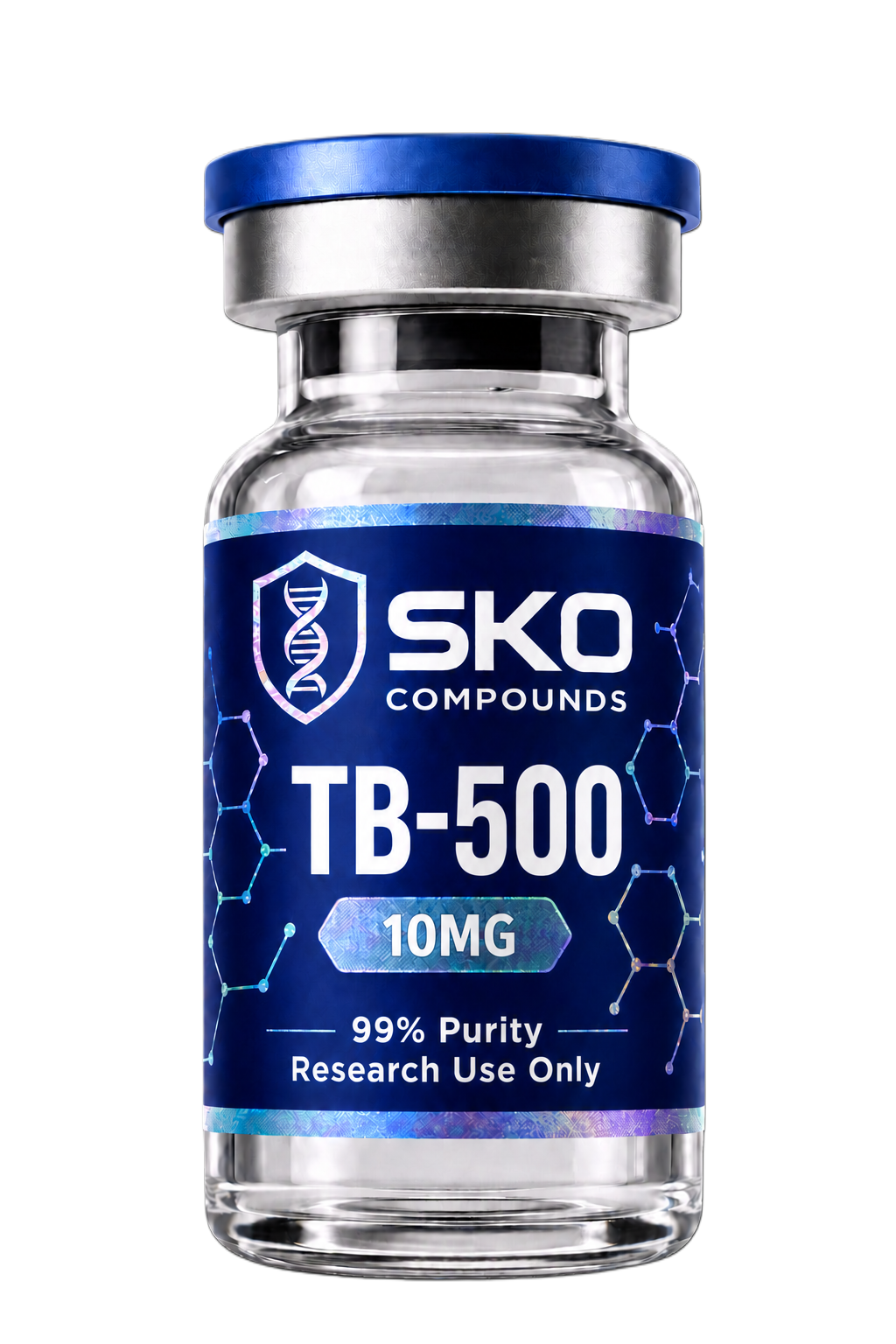
TB-500
$40.00
TB-500 is a synthetic 7-amino-acid fragment of thymosin beta-4 (sequence LKKTETQ), a naturally occurring protein involved in cellular repair and tissue remodeling. Preclinical research focuses on actin regulation, cell migration, angiogenesis, and inflammation modulation. Not FDA-approved; classified as a 503A Category 2 bulk drug substance.
Buy TB-500 — The Actin-Sequestering Peptide for Tissue Repair and Cell Migration Research
TB-500 (Thymosin Beta-4 fragment) is a synthetic peptide derived from the active actin-binding region of Thymosin Beta-4, a naturally occurring 43-amino-acid protein. Researchers study it extensively for its role in cell migration, tissue repair, and angiogenesis. Consequently, it has become a benchmark compound in regenerative and musculoskeletal research.
What Is TB-500?
TB-500 is a synthetic fragment corresponding to the actin-binding domain of Thymosin Beta-4. Scientists originally identified Thymosin Beta-4 as a ubiquitous actin-sequestering protein involved in cellular differentiation and tissue remodeling. Moreover, TB-500 retains the core actin-binding sequence of the parent molecule, which allows it to regulate actin filament dynamics and promote cell motility.
Unlike BPC-157, which acts primarily through local VEGFR2 signaling, TB-500 functions systemically by modulating the actin cytoskeleton across multiple tissue types. Therefore, researchers frequently pair the two compounds to investigate complementary repair mechanisms.
How Does TB-500 Work?
TB-500 promotes tissue repair through several interconnected mechanisms that center on actin regulation and cell migration.
Actin Sequestration and Cytoskeletal Remodeling
TB-500 binds G-actin monomers, preventing their polymerization into filaments and thereby regulating the dynamic balance between monomeric and filamentous actin. This regulation is critical because actin filaments drive cell shape changes, migration, and division. As a result, TB-500 promotes the migration of repair-relevant cells to sites of tissue damage, accelerating healing across multiple tissue types.
Angiogenesis and Endothelial Cell Migration
TB-500 stimulates endothelial cell migration, proliferation, and tube formation, which leads to new blood vessel formation. Furthermore, research by Smart et al. in Angiogenesis (2007) and Malinda et al. in FASEB Journal (1997) documented this angiogenic activity, demonstrating that TB-500 promotes vessel formation in cartilage and other tissues. Additionally, because actin filament dynamics are central to endothelial cell motility, TB-500 acts upstream in this cascade.
Anti-Inflammatory and Scar-Reducing Effects
TB-500 reduces inflammation at injury sites and may help reduce scar tissue and adhesions that impair function following injury. Notably, immunohistology studies show that treated wounds contain fewer myofibroblasts and fibroblasts with alpha-smooth muscle actin stress fibers, suggesting more organized healing.
Key Research Applications
Researchers study TB-500 across a broad range of preclinical tissue repair models.
-
Tendon and ligament healing (Achilles tendon, rotator cuff, and connective tissue repair)
-
Skeletal muscle regeneration and injury recovery models
-
Wound healing and re-epithelialization studies (keratinocyte migration, collagen deposition)
-
Angiogenesis and vascular development research (endothelial tube formation, vessel density)
-
Cardiac tissue protection and cardiovascular repair investigations
-
Neurological repair and oligodendrocyte activation research
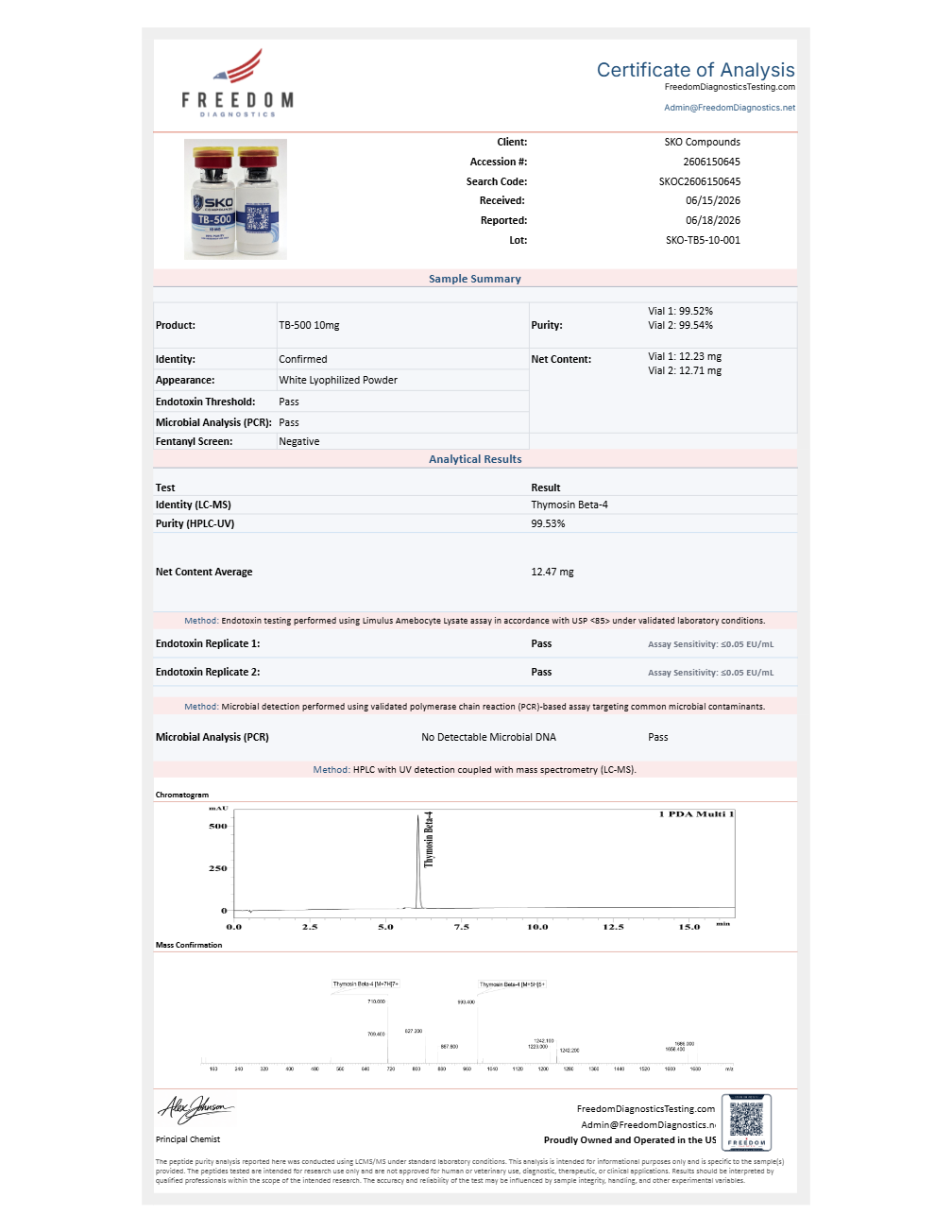
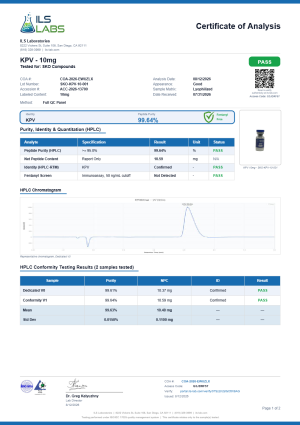
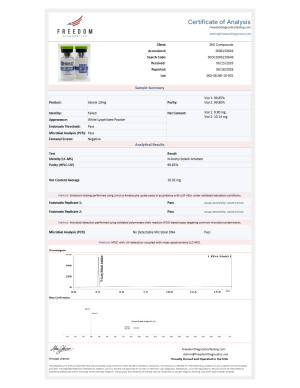
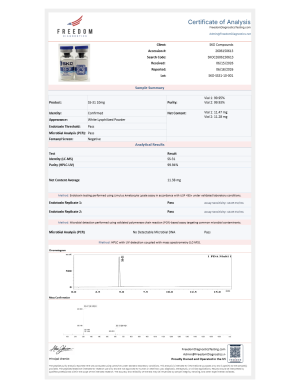
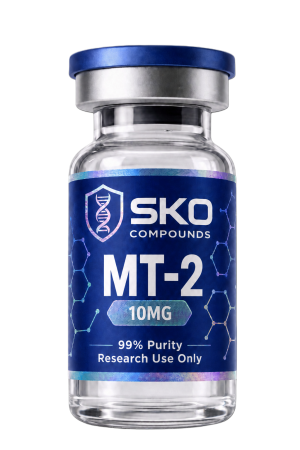
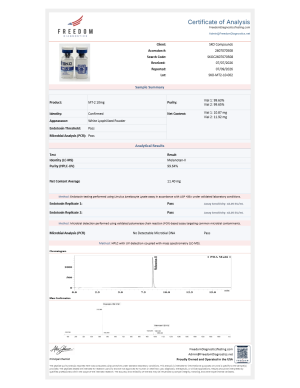
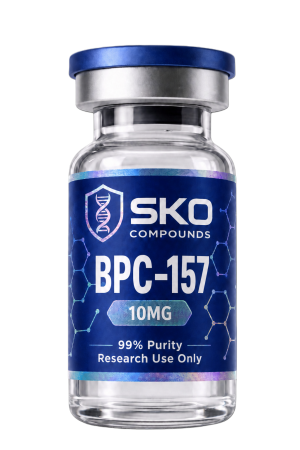
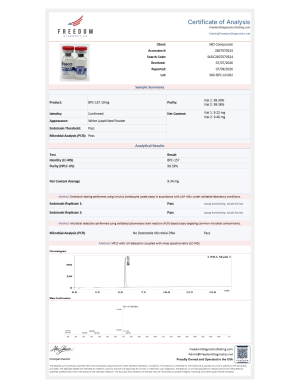
When you Buy TB-500 from our catalog, you receive a high-purity lyophilized research peptide available in 10mg vial configurations. We test every batch independently to ≥99% purity by HPLC, and we confirm identity through third-party mass spectrometry against the theoretical mass of 4963 g/mol. In addition, each batch undergoes LAL endotoxin testing, heavy metals screening, and microbial limit testing. We include batch-specific Certificates of Analysis for full research transparency.
| Parameter | Specification |
|---|---|
| CAS Number | 77591-33-4 |
| Molecular Formula | C₂₁₂H₃₅₀N₅₆O₇₈S |
| Molecular Weight | 4963 g/mol |
| Sequence | Ac-Ser-Asp-Lys-Pro-Asp-Met-Ala-Glu-Ile-Glu-Lys-Phe-Asp-Lys-Ser-Lys-Leu-Lys-Lys-Thr-Glu-Thr-Gln-Glu-Lys-Asn-Pro-Leu-Pro-Ser-Lys-Glu-Thr-Ile-Glu-Gln-Glu-Lys-Gln-Ala-Gly-Glu-Ser-OH |
| Purity | ≥99% (HPLC) |
| Appearance | White to off-white lyophilized powder |
| Storage | −20°C, desiccated, protected from light |
| Solubility | Soluble in sterile water |
| Vial Size | 3ml |
Frequently Asked Questions
What is TB-500 used for in research?
Researchers use TB-500 in laboratory studies of tendon and ligament healing, muscle regeneration, wound healing, angiogenesis, and cell migration. However, it is not FDA-approved for human or veterinary use.
How should I store TB-500?
Store the lyophilized vial at −20°C in a desiccated environment and protect it from light. After reconstitution, refrigerate the solution at 2–8°C and avoid repeated freeze-thaw cycles.
What purity should I expect?
We test every batch to ≥99% purity by HPLC. We ship a batch-specific Certificate of Analysis with each order, and it covers HPLC purity, mass spectrometry identity, endotoxin levels, and heavy metals screening.
What is the difference between TB-500 and Thymosin Beta-4?
Thymosin Beta-4 is the full 43-amino-acid parent protein. TB-500 is a synthetic fragment corresponding to its actin-binding domain, and it is designed for enhanced systemic distribution. Whereas the full protein has documented human safety data in ocular and wound-healing contexts, TB-500 specifically lacks published human clinical trials.
What is the difference between TB-500 and BPC-157?
BPC-157 acts primarily through localized VEGFR2-mediated angiogenesis and FAK-paxillin signaling. TB-500 works systemically through actin sequestration to drive cell migration. Therefore, researchers often combine them to address localized and systemic repair mechanisms simultaneously.
Important Research Disclaimer
This product is intended strictly for laboratory research use only. It is not for human or veterinary use, and not for diagnostic or therapeutic applications. As of 2026, TB-500 remains an unapproved investigational peptide with no FDA-approved indication. The FDA’s July 2026 PCAC briefing document found no evidence of TB-500 being administered to humans in any clinical studies, and a 2026 Sports Medicine review concluded that rigorous human evidence is lacking. Therefore, no one outside an institutional research setting should handle or use TB-500. Qualified researchers should handle all peptides in accordance with institutional safety guidelines and applicable regulations.
Ready to Advance Your Regenerative Research?
Buy TB-500 today and join laboratories worldwide that rely on verified purity, batch-level transparency, and U.S.-made quality.
Reviews
There are no reviews yet.